

Quick answer: Close is a sales CRM that builds calling, SMS, and email directly into the pipeline instead of treating the phone as something you bolt on later. Reps dial from a lead record, an in-browser Power Dialer queues the next call automatically, and a Predictive Dialer connects multiple lines at once for teams working the same list. It scores 28/40 on the Compixels Score: strong on problem fit and setup speed for phone-first outbound teams, held back by reporting depth, integration breadth, and support details that neither Close nor third-party reviewers spell out clearly.
Who it’s actually for
Close is built for teams where the phone is the primary outbound channel, SDRs and closers making 50 to 500+ calls a day, in businesses like real estate, insurance, financial services, recruiting, and B2B sales development where speed-to-lead and call volume decide the outcome more than nurture sequences do. If you’re currently running a separate phone system next to your CRM and losing hours a day to searching for numbers, dialing manually, and typing notes after each call, this is the exact problem Close was built to remove.
Skip it if your sales motion runs mostly on marketing automation, lead scoring, or deep customization of reports and objects. G2 reviewers consistently flag Close’s reporting as thin and its data model as rigid once you push past the basics. Skip it too if you need broad third-party integration coverage: Close’s own integrations page lists 100+ apps across 14 categories, which sounds like a lot until you compare it to Salesforce or HubSpot’s marketplaces. And skip it if you’re mid-scale and already running Salesforce or Pipedrive with integrations built out. Close doesn’t compete on ecosystem depth; it competes on how fast a rep gets from one call to the next.
Compixels Score breakdown
Total Score
Problem Fit — 8/10. The real bottleneck for a high-volume outbound team is the dead time between calls: looking up the next number, dialing manually, typing notes, and switching between a phone system and a CRM to log any of it. Close removes that dead time directly. The Power Dialer queues the next lead the instant a call ends, and the Predictive Dialer dials multiple numbers per rep and routes the first answer to whoever’s free, built specifically for teams of two or more working the same list simultaneously.
Calls, SMS, and email all attach to the same lead record, so nobody’s toggling tabs to see what happened last. Where it stops being a direct fit: if your actual bottleneck is lead scoring, marketing automation, or reporting depth rather than call volume, Close solves an adjacent problem at best. It was built calling-first, and that shows in what’s missing everywhere else.
Setup Speed — 7/10. Close offers a 14-day free trial with no credit card, and in-browser calling means reps are dialing the same day they sign up. No softphone download, no separate phone system to provision. Chloe, the built-in Voice AI agent, is included on all plans with no separate seat and no setup fee, and Close’s own claim is that most teams have it operational within an hour. The real friction shows up in the compliance layer: sending SMS in the US legally requires A2P 10DLC registration, and getting a number through that process takes carrier-side review time that’s outside Close’s control, not a same-session task.
Reps also need “Send As” permissions toggled on individually before automated workflows can send on their behalf. It’s a small step, but one more thing an admin has to remember before a team is actually live.
ROI Clarity — 7/10. The math is concrete on the calling side: outbound minutes run roughly $0.02 each and phone numbers cost $1/month, so a team can model exactly what call volume costs before committing seats. Close’s own published customer stories back the pitch with real numbers. Flatiron School reports a 75% conversion increase within 60 days and $200K in annual savings, Devvo reports 85 additional car sales a month and a 20–30% revenue lift, Hownd reports a 90% reduction in its phone bill and $110K in annual admin savings, and Underground Ecom reports 150+ hours saved monthly after full adoption. Those are vendor-published case studies, not independently audited figures, so treat them as directional rather than guaranteed.
The bigger variable is seat cost: at $109–$149 per user per month on the Growth and Scale plans. The tiers that unlock workflows, the Predictive Dialer, and User Groups. The payoff math depends heavily on team size and how many seats actually need those features, not just whether the tool works.
Reliability & Support — 6/10. Close has been running since 2013, is self-funded and profitable rather than dependent on outside capital, and currently serves 11,500+ customers. That’s a long track record for a company that isn’t going to disappear or pivot away from its core product overnight. Third-party summaries of G2 data put Close at a 4.7-out-of-5 rating across more than 2,000 reviews, with 85% five-star. What’s missing from both Close’s own site and independent sources is anything concrete on support response times, support hours, or an SLA. That’s the detail that would let a team judge what happens when something breaks, not just how the product performs day to day. Credit for stability and a strong satisfaction track record; the score stays short of the top band because “what happens when it breaks” isn’t something either party documents clearly.
⚠️This scoring is strict… but the recommendation isn’t lukewarm. Everything reviewed here is the best option we’ve found for its category, based on our experience across the market, the score just keeps us honest about where a strong pick is still weaker than perfect.
Click here to read about our methodology
What hands-on use actually looks like
The daily rhythm on Close centers on three things: the inbox, Smart Views, and the dialer. Reps are expected to keep the unified inbox, which pulls inbound emails, missed calls, SMS replies, and follow-up tasks into one view. Under roughly 50 items by clearing tasks and replies as they come in, rather than letting a backlog build. Smart Views are saved, filtered lead buckets (hot prospects, stalled deals, new inbound, whatever criteria the team sets), and the playbook is to empty them daily using the Power or Predictive Dialer, so no lead sits untouched.
Custom Activities give teams pre-formatted logging templates… Demo Completed, Proposal Sent, that keep everyone logging the same events the same way instead of freeform notes that don’t roll up into anything useful. Custom Objects handle the data that doesn’t fit a standard contact or deal record, like property addresses for a real estate team. Chloe sits on top of all of it as an AI voice agent that can run outbound calls, navigate discovery questions, handle objections, follow a set playbook, and book calendar appointments.
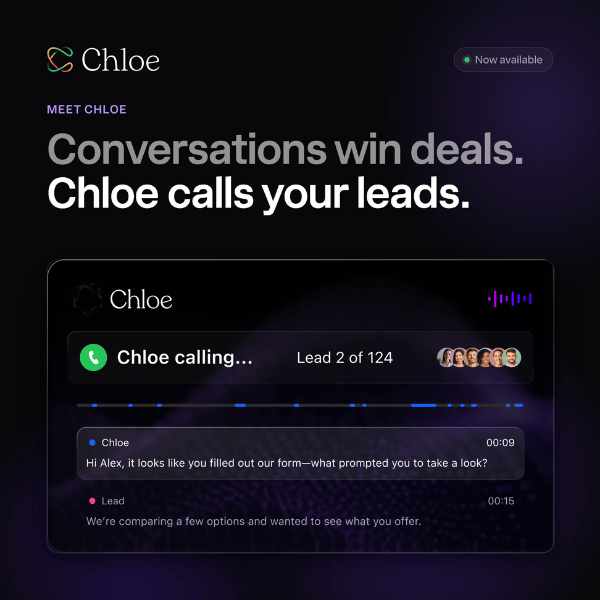
That includes calling back leads that went cold or never got a follow-up, work that would otherwise depend on a rep remembering to do it.
None of this happens without a setup step most reviews skip: an admin has to request a local phone number and complete A2P 10DLC registration before SMS sending is compliant, and reps need “Send As” permissions turned on before automated workflows can text or email on their behalf. It’s not hard, but it’s a real prerequisite, not an afterthought.

What the plans and pricing actually look like
Close runs four tiers, per user per month, confirmed against close.com/pricing:
- Solo — $19/user/month (discounted rate $9 seen at time of review). Capped at 1 user, 10,000 leads, 500 AI credits/user/month. No workflows.
- Essentials — $49/user/month ($35 discounted). Unlimited contacts and leads, team collaboration, forms, calling, and SMS included. Still no workflows.
- Growth — $109/user/month ($99 discounted), Close’s most popular tier. Unlimited leads, workflows with Chloe AI integration, Power Dialer, bulk email, and custom activities.
- Scale — $149/user/month ($139 discounted). Everything in Growth, plus the Predictive Dialer, User Groups, role-based permissions, unlimited call recording retention, and live call coaching.
On top of the per-seat price, calling and SMS run on usage: roughly $0.02 per outbound minute and $1/month per phone number. Every plan includes a 14-day free trial with no credit card required, plus a 30-day money-back guarantee.
The jump from Essentials to Growth is the one that matters most for most teams. That’s where workflows and the Power Dialer turn on, so budget around that tier, not the entry price, when comparing seat costs against a Salesforce or Pipedrive quote.
Verdict
Close treats calling as the core product instead of an add-on, and most CRMs don’t. For a team where speed-to-lead and call volume are the whole game, the Power Dialer, Predictive Dialer, and Chloe cut out the dead time that eats hours out of every rep’s day, and the case-study numbers, while vendor-published, line up with what removing that dead time should produce.
It’s not the tool for a team that needs deep reporting, broad third-party integrations, or marketing automation, and the lack of any sourced detail on support SLAs is a real gap worth knowing about before you commit a team’s seat budget to it. For phone-first outbound teams of roughly three to fifteen reps, it’s a right-sized, honestly-scored pick.
Start the 14-day free trial on Close. No credit card required, and it’s enough time to run a real Smart View through the Power Dialer before deciding.
⚠️Curious whether your own offer would hold up under a rubric like this one, just built for offers instead of software? The free Compixels Check walks you through how it works, no email needed.
